
Expert Support
(844) 344 - 4465
(844) 344-4465

Over the past ten years, multi-frequency technology has greatly increased the capabilities of modern metal detectors. Multi-frequency technology, which was once thought to be a premium feature exclusive to high-end detectors, is now found in an increasing variety of devices intended for beach detecting, coin hunting, relic hunting, jewellery recovery, and general-purpose treasure hunting. Multi-frequency technology has completely transformed how contemporary metal detectors detect targets and manage difficult ground conditions, whether you're hunting along a saltwater beach, examining a historic homesite, or scouring a nearby park.
The term "multi-frequency" appears on product websites and specs, but its true significance is sometimes unclear to detectorists. Users can choose better equipment and increase their success in the field by knowing how multi-frequency technology operates and why it matters.
Instead of depending on a single operational frequency, multi-frequency technology enables a metal detector to broadcast and process many frequencies concurrently. The detector can obtain additional information on conductivity, size, shape, and depth by simultaneously analysing targets at multiple frequencies. This frequently leads to better target recognition, enhanced performance in mineralised terrain, increased adaptability, and more precise detection of a larger variety of target kinds. To put it simply, multi-frequency technology allows contemporary metal detectors to observe more details about what is underground.
Understanding frequency in the first place is crucial to comprehending multi-frequency technology. Through the search coil, metal detectors send electromagnetic impulses into the earth. Usually expressed in kilohertz (kHz), these signals function at particular frequencies.
The way that different frequencies interact with metal objects varies. While some frequencies might be useful for detecting larger or deeper objects, others are inherently more sensitive to little targets.
A detector gets information from the target each time it sends a signal into the ground. After analysing the data, the detector creates target IDs, tones, and visual information that users can use to determine whether a target is worth retrieving. The frequency being used directly affects how the detector interacts with different targets and ground conditions.
Almost all aspects of metal detecting performance are influenced by frequency. Target sensitivity, target recognition, detection depth, ground handling, and general adaptability are all impacted. Depending on the frequency being emitted, various targets react in different ways.
Compared to larger silver coins or brass relics, small gold jewellery, thin chains, tiny relics, and low-conductive targets may react differently. Additionally, ground conditions are important, especially in locations with saltwater or mineralised soil. For this reason, one of a metal detector's most crucial features has always been its frequency.
Historically, the problem was that single-frequency detectors frequently offered advantages in some circumstances and disadvantages in others. To address such issues, multi-frequency technology was created.
A multi-frequency detector sends multiple frequencies at once and processes the data collectively, as opposed to broadcasting one frequency at a time. Each frequency contributes its own set of data about the target. This data is then combined by the detector's algorithms to produce a more comprehensive image of the area beneath the search coil.
This process takes place quite quickly. Rather than switching between frequencies or requiring users to manually select different operating modes, simultaneous multi-frequency technology allows the detector to analyze multiple frequency responses at the same time.
As a result, the detector can adjust to a greater range of targets and ground conditions without always needing to be adjusted.
One of the biggest developments in contemporary metal detection was the introduction of simultaneous multi-frequency technology. Detectorists frequently had to select equipment designed for particular kinds of hunting prior to the widespread availability of multi-frequency. While certain detectors were more adept at beach detecting or gold prospecting, others were better at coin hunting.
A more adaptable approach was made possible by multi-frequency technology. Detectors improved their ability to precisely identify targets in a greater variety of settings by processing data from several frequencies at once. For all forms of hunting, users were no longer as dependent on specialised equipment.
One of the reasons multi-frequency detectors are so well-liked by both novice and seasoned detectorists is their versatility.
Multi-frequency technology offers several advantages that help explain its growing popularity.
| Benefit | Why It Matters |
|---|---|
| Better Target Identification | More accurate target information before digging |
| Improved Beach Performance | Handles wet salt sand and saltwater conditions more effectively |
| Better Mineralized Soil Performance | Reduces ground interference and improves stability |
| Increased Versatility | Effective across a wide range of targets and environments |
| Greater Target Accuracy | Multiple frequencies provide more target information |
| Reduced Need for Constant Adjustments | Adapts to changing conditions more efficiently |
These benefits make multi-frequency detectors attractive to users who want one machine capable of handling multiple types of hunting.
Beach detection is one area where multi-frequency technology has had a very visible influence.
One of the most challenging conditions for metal detectors has always been saltwater. Many detectors may experience instability and false signals due to the conductive qualities of wet salt sand. By handling interference from salty conditions and processing target information more efficiently, multi-frequency devices aid in overcoming this difficulty.
For this reason, a lot of contemporary beach hunters favour detectors with simultaneous multi-frequency technology.
Problems akin to those on saltwater beaches can arise from highly mineralised soil. Signals produced by ground minerals frequently obstruct the detection of targets. These signals have the potential to decrease accuracy and complicate target identification in certain circumstances.
Multi-frequency technology reduces the impact of mineralisation while assisting detectors in analysing target responses. This can be a big benefit for detectorists who often explore historic homesites, relic sites, farms, or places with challenging soil conditions.
Different manufacturers have developed their own versions of simultaneous multi-frequency technology.
While the underlying goal remains similar, each company uses its own proprietary approach.
| Brand | Technology | Found In |
|---|---|---|
| Minelab | Multi-IQ | Equinox Series, X-Terra Elite |
| Minelab | Multi-IQ+ | Manticore |
| Nokta | SMF | Legend |
| XP | FMF | Deus II |
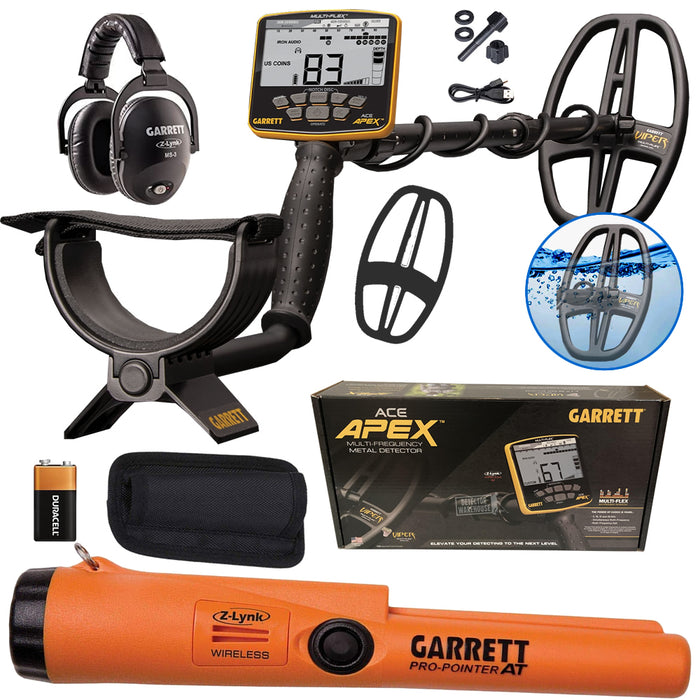
| Garrett | Multi-Flex | Apex Series |
These technologies represent some of the most recognized multi-frequency systems currently available in the metal detecting industry.
Several modern detectors have built strong reputations because of their multi-frequency capabilities.
The Minelab Equinox 900 is widely regarded as one of the most versatile detectors available today. Its Multi-IQ technology allows it to perform effectively in parks, fields, beaches, and relic sites while maintaining strong target identification.

The Minelab Manticore builds upon Multi-IQ technology through Multi-IQ+ processing, offering even greater target information and advanced detection capabilities for experienced users.

The Nokta Legend has become a popular choice among detectorists seeking advanced simultaneous multi-frequency performance at a competitive price point. Its SMF technology provides excellent versatility across a wide range of hunting environments.

The XP Deus II utilizes FMF technology and is known for its lightweight design, fast recovery speed, and strong performance in challenging conditions.
The Minelab X-Terra Elite offers multi-frequency performance in a package that appeals to users looking for simplicity while still benefiting from modern detection technology.

The answer is "yes" for a lot of detectorists. One of the main benefits of multi-frequency technology is the capacity to efficiently hunt several settings with a single equipment. Users can rely on a detector that adjusts to a greater range of situations rather than continuously changing detectors or altering settings.
The flexibility and performance of multi-frequency technology have made it one of the most sought-after characteristics in contemporary metal detecting, even if it may not be required for every user.
It can make learning easier for novices. It can enhance target identification and performance in challenging conditions for seasoned detectors.
For detectorists who hunt in a variety of areas, multi-frequency technology is particularly useful. Better target recognition is advantageous to coin hunters. Jewellery hunters become more adaptable to a variety of target types. The increased stability in wet salt sand is appreciated by beach hunters. Mineralised soil and iron-contaminated areas are frequently advantageous to relic searchers.
Multi-frequency technology appeals to both casual hobbyists and experienced detectorists because it works effectively in such a wide range of applications.

Multi-frequency technology allows a detector to transmit and process multiple frequencies simultaneously, providing more information about targets and improving overall performance.
Yes. Multi-frequency detectors generally perform better in wet salt sand and saltwater environments because they can manage conductive ground conditions more effectively.
In many situations, yes. Processing information from multiple frequencies helps provide a more complete picture of the target, which can improve identification accuracy.
Not necessarily, but many beginners appreciate the versatility and ease of use that multi-frequency technology provides.
These are proprietary multi-frequency technologies developed by different manufacturers. Each uses its own approach to transmitting and processing multiple frequencies simultaneously.
Yes. Many multi-frequency detectors can detect gold jewelry and gold nuggets, although dedicated gold prospecting detectors may still offer advantages in certain situations.
By enabling detectors to examine targets utilising many frequencies at once, multi-frequency technology has revolutionised contemporary metal detection. This method increases overall adaptability, increases performance in mineralised soil and saltwater settings, improves target recognition, and offers more information about buried things. Detectors are now able to handle a greater variety of hunting scenarios without having specialised equipment for each duty as manufacturers continue to improve their multi-frequency platforms. Knowing how multi-frequency technology functions helps explain why it has become one of the most significant developments in contemporary metal detecting, whether you're looking for coins, jewellery, antiquities, or general riches. It is the ideal combination of performance, accuracy, and versatility for many detectorists.
{"one"=>"Select 2 or 3 items to compare", "other"=>"{{ count }} of 3 items selected"}




Leave a comment