
Expert Support
(844) 344 - 4465
(844) 344-4465

The thought of making your way into gold prospecting feels exciting, especially if you are picturing yourself finding real nuggets in rivers or under the ground. However, that gold panning kit or gold detector is the first decision many beginners get stuck on. Both tools are valid, but they serve different purposes and learning stages. We break down both options in this guide so you can select what actually makes sense for your budget, location, and passion long-term — no confusion or money wasted.
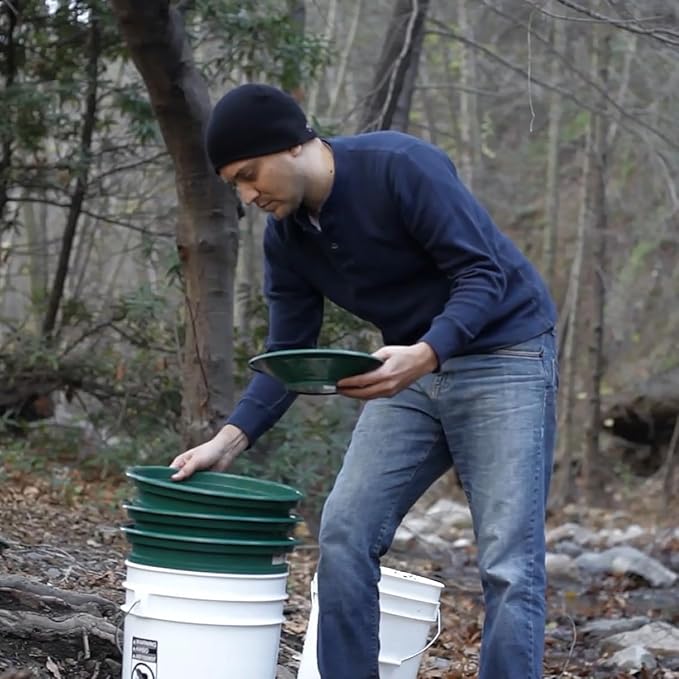
The most basic and traditional way to mine for gold is the good old-fashioned gold panning kit. For some first-timers who want to learn how gold reacts in a more natural environment with rivers and streams, it was designed for you. It utilizes easy equipment to separate heavier grains of gold from sand, gravel, and dirt with the use of water movement,t also known as gravity. It does not involve any technology, which in turn makes it very easy to understand and use. This is why many hobbyists start here, as it gives real-world experience before advancing to expensive equipment.

A gold panning kit is a type of hands-on toolbox that helps you to recover small pieces of gold from natural sediments. This is primarily for educational and exploration purposes rather than large-scale recovery. It's used by beginners to see how gold separates from lighter materials when rapidly swirled in water. Its power for learning comes from its simplicity. It barely required any batteries, no settings or technical adjustments — just gathering material from a riverbed and running it through a pan.
A typical gold panning kit for novices generally contains several important tools, which perform harmonious functions in the process:
Gold panning is based on a relatively simple principle: heavy stuff settles, while light stuff washes away. If riverbeds filled with sediment are shoveled into a pan and shaken, gold's high density pulls the metal to the bottom of the pan. Over time, sand and gravel sport a higher rate of wipeout. This process continues until only heavy concentrates are left. In time, the beginners practice to know how to pan the motion and angle of it.
Gold panning is mainly appropriate in a natural water setting, such as rivers, streams, and creek beds, where the gold has been naturally deposited over time. It is particularly sensitive to visible black sand, which often indicates a high concentration of heavy minerals. It allows beginners to find their spots before spending a lot of money on gear. It only needs water and very few tools, thus you can technically do it just about anywhere legal except where otherwise mentioned.
Gold detector – A better type of electronic device used to identify gold inside the ground or even in mineral-rich soil. It does not utilize water, so unlike panning, it can be carried out in dry environments such as a desert, a hill, or even an old mining area. Works by emitting electromagnetic signals into the ground and picking up changes in that signal when metal objects are detected. A gold detector is a very delicate device, capable of detecting tiny nuggets invisible to the human eye.


A gold detector is a type of metal detecting equipment that is typically tuned to discover natural deposits of gold. Unlike regular metal detectors, it works at higher frequencies,e,s which can identify small pieces of gold buried in mineralized soil. A search coil that scans the ground and a control unit that processes signals are part of the device. When gold or any other metal is sensed, it gives audio or visual indications to the user.
A gold detector works by sending electromagnetic waves into the ground via a coil. These waves also reflect off the metallic object (say gold), and a return signal is produced that the device interprets. The machine translates this signal into auditory tones or visual cues. Conductivity and dimensionality determine the mode of response of different metals. Advanced detectors have the ability to fine-tune sensitivity and ground balance, which minimizes interference from minerals in the soil.
Gold detectors should not be used in wet areas with a lot of salt or iron. Where gold is deep underground, it will only be found in dry areas and mineral-rich areas like deserts or old mines (with boulders). They also work where water-based farming cannot occur. They are used by prospectors to scan areas to locate likely hot spots before digging. Detectors are particularly beneficial in locating deep or heavy gold nuggets, which would typically fall beyond the reach of conventional mining operations.
Their searching processes are where the gold panning kit and a gold detector are chiefly separated. A panning kit is manual and uses water to wash gold nuggets free of sediment, but a detector works on electronic signals that help you find the metal concealed underground. Panning is a slow and careful process that is very instructive, but detectors are quicker and detect wider spaces, yet require expertise. Another difference is cost — panning kits are super cheap, and detectors could easily run you thousands. The two serve different purposes, and which one is "better" really depends on your level of experience and where in the world you are located.
| Option | Pros | Cons |
|---|---|---|
| Gold Panning Kit |
|
|
| Gold Detector |
|
|
Selecting a gold panning kit or a gold detector is determined primarily by your level of experience, budget, and aims. If you are an absolute beginner, a panning kit is typically the most recommended choice because it is straightforward, inexpensive, and will give you the basics about how gold works in nature. A detector works better for those who learn where to prospect in advance or would like quicker results on dry land. Working small allows you to build your confidence and avoid the feeling of frustration. When you have grasped the fundamentals, it is then that upgrading to a detector makes sense and is much more worthwhile.
The simplest and most reasonable way for newbies is to start small and build up as needed. More experienced prospectors will generally recommend starting out with a gold panning kit since it shows the natural way gold behaves in rivers and gives you knowledge of where deposits form. When you can capably identify prime areas and read sediment characteristics, subscription to a gold detector is immensely more fruitful. A common reason many beginners have trouble when they go straight to detectors is that they often do not even know the basic field. Together, they create a powerful strategy — pan for confirmation and detect for deeper digging.
There are common, easy mistakes that beginners make when they start prospecting for gold. One of the most common is purchasing high-end gear too early, without a firm grasp on basic techniques. #3 Picking bad locations and expecting magic to happen right away. Others also neglect lithology and do not research gold deposit areas. For beginners, the biggest disadvantage of panning is that they are likely to hurry the process instead of learning how to use proper technique, meaning missed gold. Nowadays, detectors can give the wrong signal if adjusted incorrectly, and it is very frustrating. Prospecting is a game of patience and understanding.
Is gold panning still useful today?
Yes, gold panning is still widely used because it is simple, affordable, and effective for learning how gold behaves in natural environments. It remains a strong entry-level method.
Can beginners find gold with a detector?
Yes, but it depends on location and practice. Beginners can find gold with detectors, but understanding settings and terrain is important for success.
What is the cheapest way to start gold prospecting?
A basic gold panning kit is the cheapest and most practical way to begin. It requires minimal investment and no technical knowledge.
Do I need both tools eventually?
Many prospectors use both. Panning helps confirm gold presence, while detectors help locate deeper deposits, making them complementary tools.
It will be what you need to learn for gold prospecting and not as much the newest, most fancy tool. It provides a low-cost, easy-to-learn tool for understanding gold movement naturally. Gold Detectors, although very capable, are more intended for those prepared to take it further and require some familiarity before use. Both tools are useful, but they represent different points in the learning process. The smart way is to use a small set of practical applications and get accustomed to them before advancing — it helps if you want to collect gold, and makes the whole deal more sustainable in the long run.
{"one"=>"Select 2 or 3 items to compare", "other"=>"{{ count }} of 3 items selected"}



Leave a comment