


The crops are coming in. Permission season is now in full swing. The coil that worked all summer in a trashy park is not the tool for 300 acres of clean stubble. Here’s how to match your coil to the ground in front of you. By brand, by detector, by what that ground actually demands right now.
For new fields, increase coil size. Large coils are the right tool for low trash densities: Minelab M15 (Manticore) $375; Nokta LG30 (Legend) $152.99; Garrett Viper (Apex/Vortex) $132.29. Each swap includes a size-matched coil cover and hardware set. Four-step install: wrap cable tight, align connector pin, hand-tight bolt cplus quarter turn, and fresh ground balance.
Why Harvested Ground Changes the Equation
All summer you fought bottle caps, pull tabs, and ironed junk crammed into tight spaces. A little coil made sense. It divided targets; it ignored most of the trash, and it let you swing without hitting the sides of a swing set.
Another problem is harvested fields. The trash density drops to near zero. The earth cracks open. Targets you've been working all year, coins at 10 inches, relics driven deep by plowing, suddenly within reach. " The only thing that prevents you from finding them is a coil never designed for depth on open ground.
Logic dies in the fall. A large coil covers more ground per swing, pushes the signal deeper, and stops punishing you when you sweep wide. The trashy-park liabilities are not out in an empty, stubbled field.
This is where most detectorists go wrong. They take the same coil from a June park session into a September field, wonder why they are only pulling shallow coppers, and assume the field is hunted out. It usually isn’t. The coil simply does not fit the job.
The single biggest return change you can make to your kit between now and the end of October is going up in coil size. In the rest of this article, we tell you which coil to buy, how to fit it correctly, and what else to order at the same time.
Before You Swap: Coil Installation Done Right
A coil change takes ten minutes. A botched coil swap leads to false signals, intermittent connections, and frustrating sessions where you blame the ground instead of the over-tightened bolt. All of that is prevented by these four steps.
-
1
Cable Wrap Tension
Wrap the cable tightly and evenly from the coil body to the shaft. No loose loops, no slack hanging between the wraps. A loose cable vibrates during the swing. The coil wire moves with every vibration. The detector reads this as a signal. Use the cable clips provided and wrap tight. Check tension before each session.
-
2
Connector Pin Alignment
There is a reason for the locating notch in the coil connector. Align it with the socket before pressing down. Forcing a misaligned connector bends the pins, and bent pins cause intermittent signal loss that looks exactly like EMI or ground noise. Flush seat and confirm. Lock collar.
-
3
Bolt Torque
Excessive tightening of the coil bolt breaks the coil ear. Hand-tight plus a quarter turn is the proper torque for almost every coil mount. Place the nylon washer that is supplied between the coil ear and the bolt head. If you have done more than four or five swaps, get yourself a new nylon lock nut. It's a $2 part to avoid a $200 problem.
-
4
Re-Balancing After a Size Change
The ground balance reading of the detector is affected by a bigger coil. Run a new ground balance before your first swing, although the machine will remember the settings from the last session. On machines that store ground balance in memory (Equinox, Manticore, Legend), the stored figure is from your old coil and old ground. Pump for two minutes, and you will save yourself a session of unreadable low grunts.
Don't use a nylon lock nut more than four or five times. The locking thread fails silently, and a coil that comes loose in the middle of a session on open ground means a long walk back to the car.
Coil Picks by Brand for Fall Fields
Each of the recommendations below is based on the same philosophy: open ground, low trash, depth is the priority. Where there is a counter-case—readers still working parks or tight spots—it is included. This is to get the right coil for your situation, not the most expensive one.
MinelabManticore Owners
Primary Pick — Open Fields
M15 15"×12" Waterproof DD Searchcoil
Fits: Minelab Manticore · DD Configuration · Waterproof to 5m · Skidplate included
The fall field coil for Manticore owners. The 15×12" DD footprint pushes detection deeper and wider than any coil in the standard Minelab lineup. Coins at 10 to 12 inches — sitting undisturbed for decades — come into range. Not a summer purchase. Do not take it to a park. Use a harness on sessions over three hours.
M8 8"×5.5" Waterproof DD Searchcoil
Fits: Minelab Manticore · DD Configuration · Waterproof to 5m · 400g with skidplate
Not a step down — a different tool for a different job. The M8 separates targets in dense environments where the M15 produces a wall of overlapping signals. If you are still working parks, trashy sites, or fields with heavy iron scatter, this is the correct coil. Keep it in the bag for the right ground.
Nokta
Legend Owners
Primary Pick — Open Fields
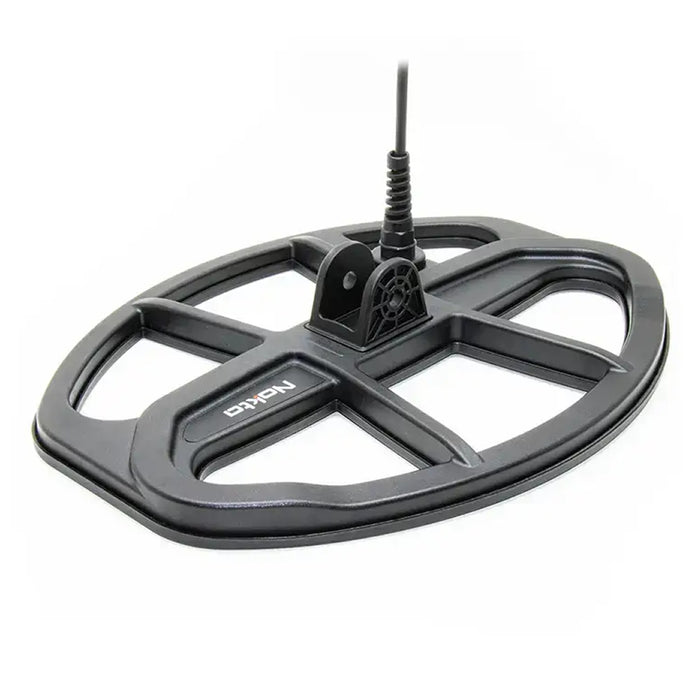
LG30 12"×9" Waterproof DD Searchcoil
Fits: Nokta Legend · DD Elliptical · Coil cover and mounting hardware included
The fall upgrade most Legend owners should be making. The 12×9" elliptical shape is wider than the stock 11" round for ground coverage, light enough to swing all day without arm fatigue, and navigates crop rows and field-edge debris better than a large round coil. Expect 2 to 3 extra inches of depth on coin-sized targets on ploughed arable ground. Coil cover and mounting hardware included in the box.
Simplex and FindX Owners
Primary Pick — Open Fields
SX28 11" DD Waterproof Searchcoil
Fits: Simplex LITE, Simplex BT, Simplex ULTRA, FindX · Note: Not compatible with older Simplex+ units
The right step up for Simplex and FindX owners heading into their first serious permission field. The 11" DD configuration gives more ground coverage without the complexity jump of a larger elliptical. DD coils handle mineralised ground better than concentric designs — relevant on heavy clay or coastal soil. It will find more than the stock coil in open ground.
Garrett
ACE Apex and Vortex Owners
Primary Pick — Open Fields
Viper 6"×11" DD Submersible Searchcoil
Fits: Garrett AT MAX, AT PRO, AT GOLD · DD Elliptical · Submersible
Garrett's open-field answer for the Apex and Vortex platforms. The 6×11" elliptical shape gives you sweep width with a manageable profile — useful on fields ploughed into ridges or where stubble is still standing tall at the edges. The DD configuration handles iron-mineralised ground cleanly, separating background iron noise from real targets. Priced correctly for the platform.
XP
Deus II and ORX Owners
The Deus II is a wireless coil system—no cable to wrap and no connector to line up. That removes two of the four installation failure points described above. Still applies bolt torque and ground balance.
Deus II owners upgrading for open fields: move to the 13″ round HF coil or 11″×13″ elliptical depending on ground mineralization. HF coils are most effective in moderate mineralization. The low-frequency coil option offers greater stability on heavy ground.
ORX owners have a smaller coil selection, but the same principle applies. Go up from the stock coil for harvested field work, re-balance after the swap, and run the proper frequency for your soil type.
Protect the Coil: Covers Are Not Optional on Stubble
Stubble is rough. Worse in Flint. One dragging of a coil, uncovered, through a freshly harvested wheat field in a session will scratch the face forever. Scratched coil faces reduce resale value and indicate a coil that has been used hard without care.
Coil cover is a small percentage of coil cost. Order it at the same time as the coil—not after the first session. When it is a question of waiting, the cover protects a damaged surface rather than preventing damage to a new one.
- M15 15" skidplate — for Minelab M15 owners
- M8 8" skidplate — for Minelab M8 owners
- LG30 cover — for Nokta LG30 owners (included in box)
- SX28 11" cover — for Nokta SX28 owners
- Viper 6"×11" cover — for Garrett Viper owners
The Parts That Break on a Coil Swap
There are two things that fail more often than anything else on a coil swap, and those are the cable and the hardware. Knowing their names and ordering spares means you won't have to stop early.
The bolt strips if it is overtightened. The nylon lock nut loses its locking thread after 4 or 5 swaps. The washer is often lost on the first swap if it falls into grass. Order a replacement hardware set with each new coil—they are almost free.
Add the cable and hardware set to cart at the same time as the coil. They ship in the same order, arrive together, and you go into the field with everything you need.
Buying Order Summary
Use this table before you order. Pick your detector, find your coil, add the cover, check the cable.
| Detector | Recommended Coil | Sale Price | Cover | Cable |
|---|---|---|---|---|
| Manticore (open fields) | Minelab M15 15"×12" | $375 | Yes — M15 size | Check before reuse |
| Manticore (parks / trash) | Minelab M8 8"×5.5" | $275 | Yes — M8 size | Check before reuse |
| Legend | Nokta LG30 12"×9" | $152.99 | Included in box | Usually included |
| Simplex / FindX | Nokta SX28 11" DD | $135.99 | Yes — SX28 size | Usually included |
| ACE Apex / Vortex | Garrett Viper 6"×11" | $132.29 | Yes — Viper size | Check before reuse |
| Deus II | 13" HF or 11"×13" elliptical | See product page | Yes | Wireless — N/A |
| ORX | Platform upgrade coil | See product page | Yes | Wireless — N/A |
Order the coil, the cover, and the hardware together. Install correctly using the four steps above. Re-balance before the first swing. The field will tell you the difference.
Frequently Asked Questions
What coil is best for open fields after harvest?+
A larger coil in the 12 to 15 inch range is best for freshly harvested fields. Low trash density and open ground mean a large coil's advantages — depth and ground coverage — outweigh its disadvantages. The Minelab M15 ($375) for Manticore owners, Nokta LG30 ($152.99) for Legend owners, and Garrett Viper ($132.29) for Apex and Vortex owners are the top brand-specific picks.
How do I install a metal detector coil correctly?+
Wrap the cable firm and even from the coil body to the shaft with no slack loops. Align the connector pin notch before seating and seat fully before locking the collar. Torque the bolt to hand-tight plus a quarter turn using the supplied washer and a fresh nylon lock nut. Run a fresh ground balance before the first swing after any coil size change.
Do I need a coil cover for stubble fields?+
Yes. Stubble and flint scratch unprotected coil faces permanently in a single session. A coil cover absorbs the damage and is replaced when worn rather than the coil itself. Order a size-matched cover at the same time as the coil.
What parts do I need when swapping a metal detector coil?+
The coil cable (inspect before reusing — replace if more than two seasons old or kinked), the coil bolt, a nylon washer, and a nylon lock nut. The lock nut should not be reused after four or five swaps. Order a hardware replacement set with every new coil.
Which Minelab coil is best for open fields?+
The Minelab M15 15 inch searchcoil is the best open-field depth coil for the Manticore. Currently $375 (save 17% off $450). It pushes detection deeper and wider than any coil in the standard Minelab lineup. Not suited to parks or dense trash sites — built for clean, open ground where depth is the priority.
Why should I go up in coil size after harvest?+
Harvested fields have near-zero trash density. The reason to run a small coil — target separation in dense junk — disappears. A larger coil covers more ground per swing, pushes detection depth, and accesses deep targets that a summer park coil cannot reach. September is the best window to make this change before permissions close for winter.
Leave a comment