
Expert Support
(844) 344 - 4465
(844) 344-4465

Gold hunting does not have to drain your wallet. The detectors built today pull real gold from the ground using higher frequencies, smarter coils, and lighter builds, and plenty of them sit well under a thousand dollars. For a lot of us, that first faint gold tone is what turns a weekend hobby into a habit you cannot shake.
Short answer: The best budget gold detector under $1,000 right now is the Garrett Goldmaster 24K at about $680, a true gold specialist running at 48 kHz. If you want one machine that handles gold plus coins, relics, and the beach, the Minelab Equinox 900 at about $899 is the strongest all-rounder. On a tighter budget, the Garrett ACE 400 near $360 is the smartest entry point.
If you are getting started, a metal detector built with gold in mind gives you the best shot at success. Not every machine holds up in mineral rich soil or near rivers, but the right budget model will. This guide covers the top gold detectors under $1,000, how they actually find gold, the coil and accessory choices that change your results, and where you can legally hunt.
| Model | Frequency | Coil | Waterproof | Approx Price | Best For |
|---|---|---|---|---|---|
| Garrett Goldmaster 24K | 48 kHz VLF | 6x10" DD | Coil only | $680 | Small gold in mineralized soil |
| Minelab Equinox 900 | Multi-IQ plus single (4 to 40 kHz) | 11" and 6" DD | Up to 16 ft | $899 | Versatile gold, coins, and beach |
| Garrett AT MAX | 13.6 kHz | 8.5x11" DD | Up to 10 ft | $831 | Deep targets on rugged terrain |
| Garrett ACE 400 | 10 kHz | 8.5x11" DD | Coil only | $360 | Beginner coins, jewelry, larger gold |
| Garrett ACE 300 | 8 kHz | 7x10" concentric | Coil only | $260 | Entry level budget start |
The reason a budget machine can find gold comes down to physics. Gold often shows up as tiny flakes and small nuggets, and higher frequencies are far more sensitive to those small targets. A coil running at 40 kHz or 48 kHz reacts to gold that a 7 kHz coin machine walks right over. That single fact is why a focused gold detector beats a general purpose one in real gold ground.
Gold also behaves oddly on the target ID scale. It is a low conductor, so a small gold nugget reads close to foil and pull tabs, right where most beginners set their discrimination to reject trash. Turn that discrimination up and you reject your gold along with the junk. This is why gold hunting is done in all metal or gold mode with little to no discrimination, and why you learn to dig the marginal signals.
Two more controls do the heavy lifting. Ground balance reads the iron minerals in the soil and cancels that noise, so faint gold tones come through clean. Auto tracking systems like Garrett XGB adjust as you move across changing dirt. Threshold adds a steady background hum, and any break or boost in that hum is your cue to investigate. Without a threshold, the faintest deep gold simply stays silent.
Put it together and a sub thousand dollar VLF detector becomes a real prospecting tool that pulls gold from dry washes, creek beds, and old mine areas across gold country in Arizona, California, and Nevada.
Plenty of buyers ask why they cannot just use a normal detector for gold. You can, but you will leave the small stuff in the ground. Standard coin and relic detectors are tuned around 5 to 15 kHz because that range suits high conductive targets like silver coins and copper. Those frequencies are not very responsive to small, low conductive gold.
Dedicated gold detectors flip the priorities. They run higher frequencies, usually 18 kHz and up, lean on all metal or gold modes, and give you a fine threshold so you can hear the weakest targets. The Garrett Goldmaster 24K at 48 kHz sits at the sensitive end of that range, which is exactly why it shines on flakes and pickers.
There is a tradeoff worth knowing. High frequency buys sensitivity to small gold but gives up some depth on large or deep targets, and it tends to be noisier in trashy or heavily mineralized ground. A lower frequency all rounder like the AT MAX reaches deeper and runs quieter, but it will miss the tiniest gold a high frequency machine would catch.
The practical rule is simple. If your sites are real gold country and small gold is the prize, buy a gold specialist. If you want one detector for gold, coins, relics, and the beach, a multi frequency machine such as the Equinox 900 covers more ground without forcing you to pick one job.
Gold machines come in two main types, and the difference shapes what you can afford. VLF, or very low frequency, is what every budget gold detector uses. A VLF machine transmits and receives on set frequencies, gives you target ID and discrimination, and is sensitive to small gold. Its weakness is mineralization, which is why ground balance matters so much on a VLF.
Pulse induction, or PI, works differently. It fires short bursts and reads the decay, which lets it ignore mineralization almost entirely and punch deep on larger nuggets. The catch is that PI offers little discrimination and is weaker on the smallest gold, and the serious PI gold machines from Minelab cost several thousand dollars, far outside this budget.
| Factor | VLF (budget gold) | Pulse Induction |
|---|---|---|
| Small gold sensitivity | Strong | Weaker |
| Depth on big nuggets | Moderate | Strong |
| Handles mineralization | Needs ground balance | Excellent |
| Target ID and discrimination | Yes | Minimal |
| Budget under $1,000 | Yes | No |
For anyone shopping under a thousand dollars, the choice is made for you. You are picking among VLF detectors, so the smart play is the highest practical frequency you can use in your soil, paired with solid ground balance. Every detector in this guide fits that description.
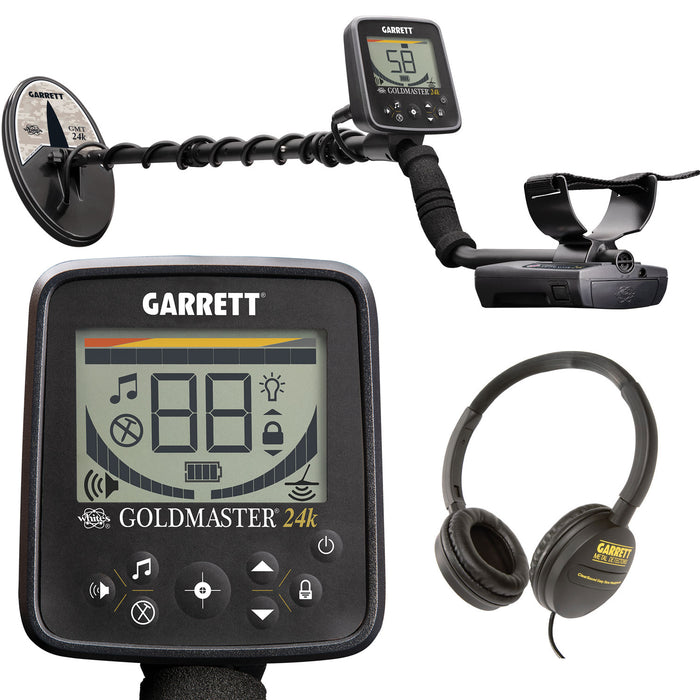
The Goldmaster 24K is the most sensitive dedicated gold detector you can buy under a thousand dollars. That 48 kHz frequency is the highest in this lineup, and it shows on tiny flakes and pickers that other machines miss. The XGB ground balance keeps it stable in hot, mineral heavy dirt, and the iron cancel feature helps you skip the trash. The waterproof DD coil takes on rough, dry country without complaint. If your main goal is finding gold and nothing else, this is the one.
The Equinox 900 packs serious capability into a light, foldable frame. Its multi frequency engine scans several depths at once, so it pulls good targets out from under iron and trash. The high 40 kHz single frequency and the dedicated Gold mode make it a real prospecting option, not just a coin machine that happens to beep on gold. Fast recovery and clear target ID make it easy to separate keepers from junk. If you want one detector for gold today and the beach next weekend, this is the most versatile pick here.
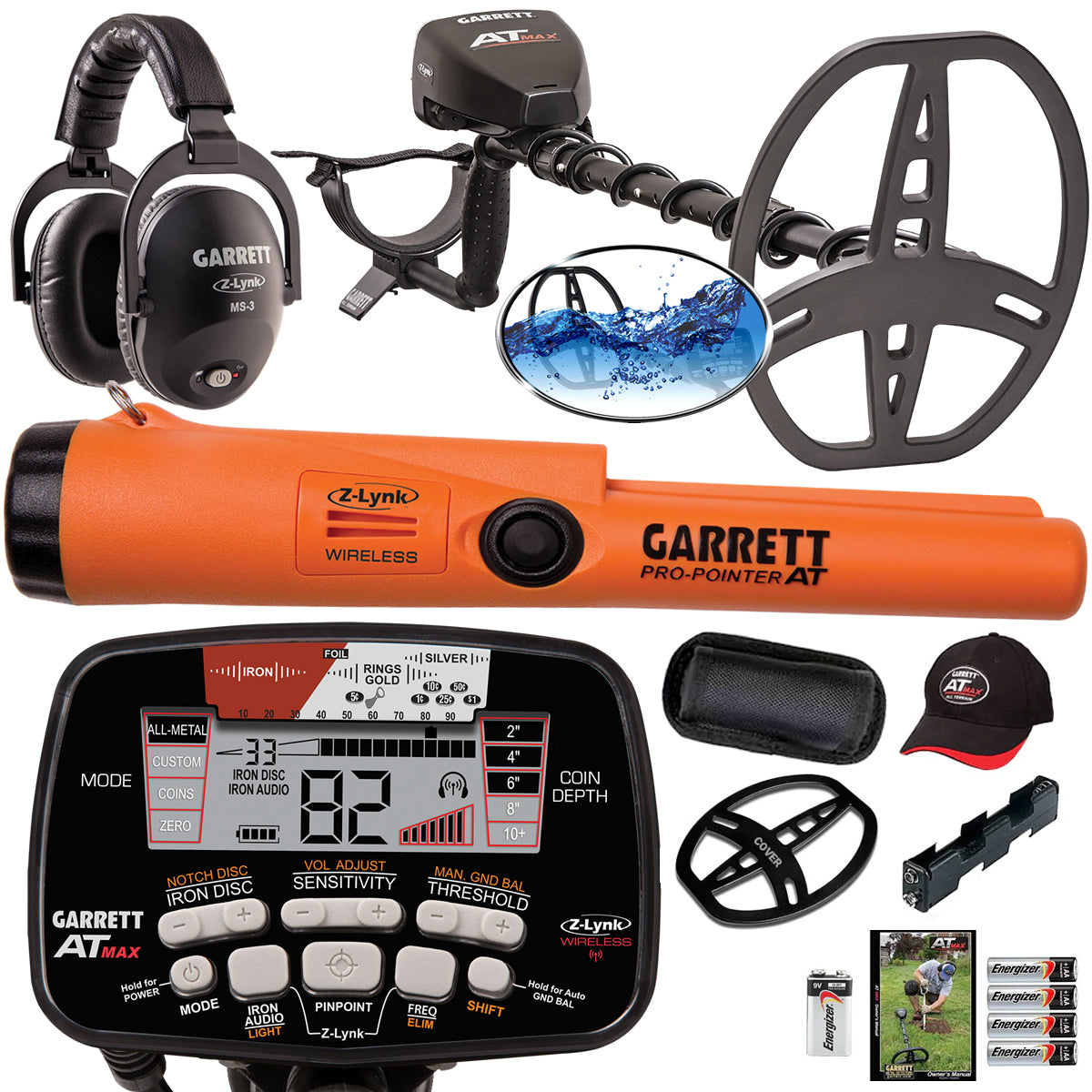
The AT MAX has been a workhorse since 2017 for good reason. At 13.6 kHz it is tuned more for coins, jewelry, and relics, but it still handles larger gold pieces well and reaches deep targets that lighter machines cannot. True All Metal mode adds depth and sensitivity, and the manual ground balance gives you control in tricky soil. Fully waterproof to 10 feet, it shrugs off creeks and rain, and the wireless audio keeps the cords out of your way on rough trails. A dependable, do everything choice for mixed terrain.
The ACE 400 is the value champion of the group. The 10 kHz frequency is not built for the tiniest flakes, but it does well on small to mid sized nuggets and shines on coins and jewelry. Iron Audio lets you hear the trash before you dig it, which saves a beginner a lot of wasted holes. The DD coil holds up in mild mineralization, and the digital target ID takes the guesswork out of learning. For the price, it punches well above its weight.
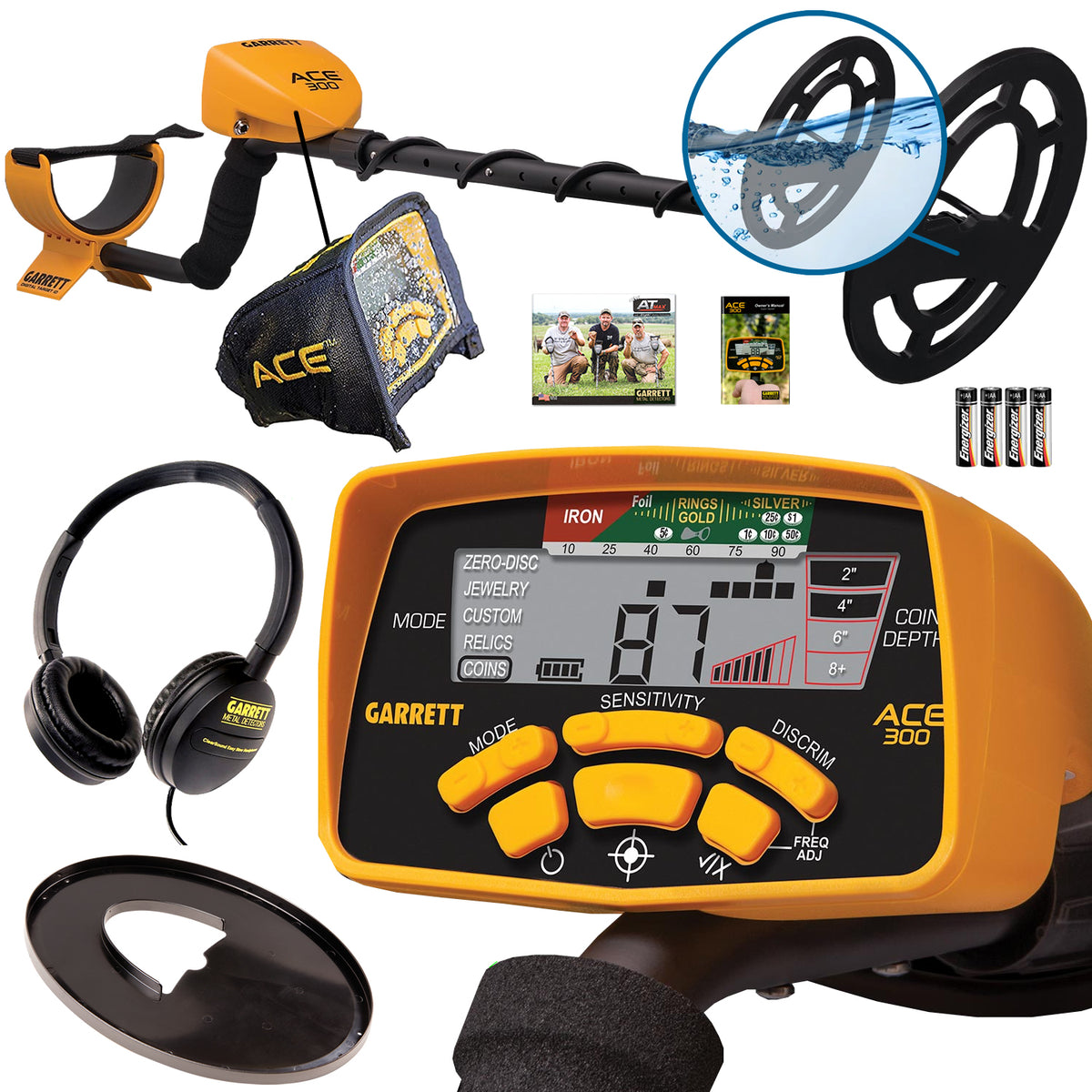
The ACE 300 is the cheapest doorway into the hobby that still finds real metal. It runs a fixed 8 kHz frequency, so it is not a nugget specialist, but it will locate surface gold and larger pieces in clean, low mineral soil. The concentric coil and digital target ID make learning simple, and the depth indicator helps you judge a target before you dig. Use it in parks and dry beds without heavy iron, and it will teach you the basics before you upgrade.
Five things separate a detector that finds gold from one that only finds frustration. Run through these before you buy.
Buyer tip: Match the machine to your ground first. A 48 kHz Goldmaster 24K rules dry, mineralized gold country, while a multi frequency Equinox earns its price the moment you also want to hunt coins and the beach.
The coil matters almost as much as the detector. Coil size controls the trade between sensitivity, depth, and ground coverage, and switching coils can turn a slow site into a productive one.
Small coils, around 6 inches, are more sensitive to tiny gold and far easier to work in trash and tight spots between rocks. They cover less ground per sweep and reach a little shallower, but in nugget country that pinpoint sensitivity is often worth it. This is why the 6 inch coil that ships with the Equinox 900 is a favorite for picking apart mineralized patches.
Large coils, 11 inches and up, give more depth and cover ground faster, which suits open fields and chasing deeper, larger pieces. The cost is reduced sensitivity to the smallest gold and more chatter in trashy or mineralized dirt. The 6x10 inch DD on the Goldmaster 24K is a smart middle ground that balances coverage with small gold response.
Coil shape counts too. DD coils sweep a steadier pattern that holds depth in mineralized soil, while concentric coils give tighter pinpointing in clean ground. For gold in tough dirt, DD is the safer default. If you can, own one large and one small coil and swap based on the site in front of you.
A detector is the start, not the whole kit. A few inexpensive tools turn missed gold into recovered gold and save you hours of digging.
A pinpointer is the first upgrade most hunters make. Once your coil narrows a target to a small area, a pinpointer like the Garrett Pro-Pointer finds the exact spot in seconds, which matters when you are chasing a flake the size of a match head. A sturdy gold pick or digging tool gets you into hard, rocky ground without bending a cheap trowel.
For fine gold recovery, carry a plastic scoop, a classifier to sift the dirt, and a snuffer bottle to suck up the tiny pieces you cannot grab by hand. These cost little and stop the smallest gold from slipping back into the gravel. Good headphones round out the kit, because the faint threshold breaks that signal deep gold are easy to miss through a built in speaker, especially with wind or water nearby.
You do not need everything on day one. Start with a pinpointer and headphones, add recovery tools as your sites get richer, and build the kit around the ground you hunt most. Browse compatible gear on the Detector Warehouse accessories page and match it to your machine.
Finding gold is only half the job. Knowing where you are allowed to swing keeps the hobby fun and legal, so check the rules before you head out.
Much public land in the western United States, managed by the Bureau of Land Management and the Forest Service, is open to recreational metal detecting and prospecting. The catch is mining claims. A lot of gold bearing ground is already claimed, and detecting on an active claim without permission is off limits. Research the claim status of an area before you dig, and stick to open public land or ground where you have the owner's consent.
National parks and most national monuments prohibit metal detecting entirely, so leave the detector in the truck there. On private property, always get clear permission from the landowner first, ideally in writing. State and county rules vary as well, and some waterways and historic sites carry extra protection.
This is general guidance, not legal advice, and the rules change by location and over time. Confirm current regulations with the local land management office before you hunt a new area. A quick phone call or website check saves you from fines and protects access for the rest of us who love this hobby.
The right spot matters as much as the right machine. Dry washes are a classic starting point. Gold is heavy, so it drops and settles in low spots, bedrock cracks, and the inside bends of old water channels, exactly where a high frequency machine like the Goldmaster 24K will sing on the small stuff.
Creek banks and shallow stream beds are next, and this is where waterproof models pull ahead. The Equinox 900 and the AT MAX let you scan into the water and along the wet edges where flood gold hangs up. Work slow, keep the coil flat, and overlap your sweeps.
Old mine areas and tailing piles reward patience, because miners moved enormous amounts of dirt by hand and missed plenty. A small coil helps you squeeze between rocks and into tight ground a big coil cannot reach. Beginners are fine starting in parks and clean dry beds with the ACE 400 or ACE 300 while they learn to read tones, then pointing a dedicated gold machine at real gold country once they know what a good signal sounds like.
Affordable gold detectors are more capable now than they have ever been. Whether you are working a dry wash in the high desert or scanning a creek bank at first light, the right budget machine can put real gold in your pouch. Start with ground you can reach, learn the tones, and let that first signal hook you the way it hooks the rest of us.
Every detector reviewed here is available at Detector Warehouse, many with bundles, free delivery, and the accessories you need to hunt on day one. Pick your machine, get out there, and go find what is buried.
{"one"=>"Select 2 or 3 items to compare", "other"=>"{{ count }} of 3 items selected"}




Leave a comment