


Looking for the best way to find gold? Whether you are a beginner or a seasoned prospector, choosing the right gold metal detector makes all the difference. Not all detectors are built for gold. You need models with the right features: high frequency, solid ground balance, and the ability to cut through tough, mineralized soil.
Quick answer: The best gold metal detectors in 2026 are the Minelab Gold Monster 1000 for fine nuggets and flakes (45 kHz, purpose built for gold), the Garrett AT MAX for all-terrain hunting with full waterproofing, and the Garrett ACE 400 for budget-conscious beginners. Serious prospectors working extreme ground should look at the Minelab Equinox 800 for its multi-frequency Gold Mode.
Gold hunting is different from coin or relic hunting. Gold is often hidden in mineral-rich soil and tricky terrain. That is why it pays to pick a detector tuned for gold rather than a general-purpose machine.
Below are the top-rated gold metal detectors that help people just like you find gold nuggets, flakes, and buried targets, ranked by what each one does best.
Comparison Table: Top Rated Gold Detectors
| Feature | Garrett AT MAX | Garrett ACE 400 | Garrett ACE 300 | Minelab Equinox 800 | Minelab Vanquish 540 | Minelab Gold Monster 1000 |
|---|---|---|---|---|---|---|
| Technology Type | VLF | VLF | VLF | Multi-Frequency | Multi-Frequency | VLF |
| Frequency (kHz) | 13.6 | 10 | 8 | 20/40 + Multi | Multi-IQ | 45 (Fixed) |
| Wireless Audio | Yes (Z-Lynk) | No | No | Yes (Bluetooth + WM) | Yes | No |
| Gold-Specific Mode | All-Metal | No | No | Yes (Gold Mode) | No | Yes (Gold & Deep All-Metal) |
| Waterproof Capability | Fully (10 ft) | Coil Only | Coil Only | Fully (10 ft) | Coil Only | Coil Waterproof Only |
| Ground Balance | Manual + Auto | Fixed | Fixed | Manual + Auto | Auto | Automatic |
| Rating | 5.0 (162 reviews) | 4.9 (65 reviews) | 4.9 (56 reviews) | 4.8 (30 reviews) | 4.9 (19 reviews) | 4.8 (top rated) |
What Makes a Metal Detector Ideal for Gold?
Gold is small, often deep, and usually found in ground packed with iron minerals, salt, and hot rocks. A standard coin detector gets overwhelmed in these conditions and either falses constantly or tunes the gold out completely. Gold-capable machines are designed to stay stable and sensitive exactly where ordinary detectors fail.
Five features separate a real gold machine from a general-purpose one:
- High Frequency: Frequencies in the 13 kHz to 45 kHz range pick up tiny flakes and sub-gram nuggets that low-frequency coils walk right over.
- Ground Balance: Manual or automatic ground tracking cancels out the mineral response in red clay, salt flats, and black sand so the target signal stands out.
- All-Metal or Gold Mode: A dedicated mode keeps you hearing every faint target instead of discriminating gold away as junk.
- Waterproofing: Productive gold ground sits in and around creeks, rivers, and desert washes, so a sealed coil or fully submersible body matters.
- Wireless Audio: Low-latency wireless cuts cable snag in rough terrain and delivers the faint whisper of a small target straight to your ears.
Match these features to where you hunt and your find rate climbs fast. Want to see more options built for this work? Explore our full lineup of gold prospecting metal detectors.
Top Rated Gold Metal Detectors (2026 Picks)
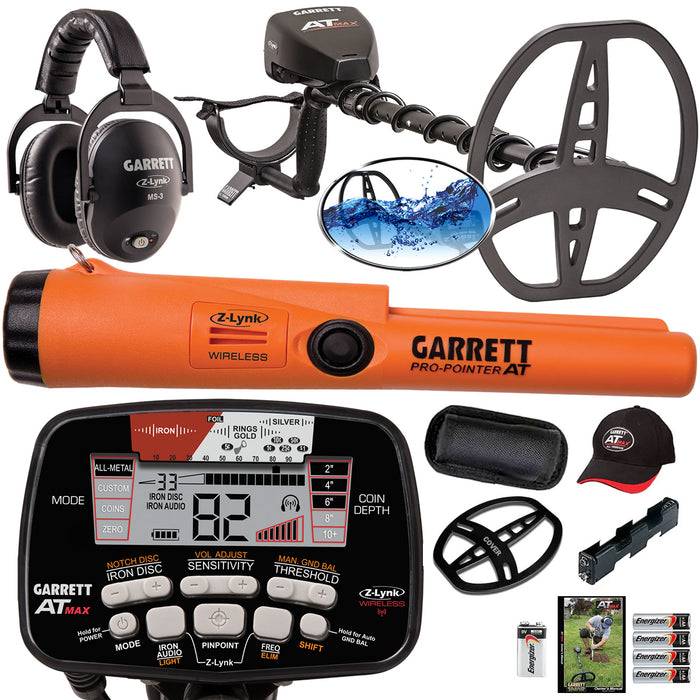
1. Garrett AT MAX with Pro-Pointer AT Z-Lynk Best All-Terrain
Best for: All-terrain gold hunters who need depth, full waterproofing, and wireless audio.
- Frequency: 13.6 kHz (VLF)
- Waterproof to 10 ft
- Z-Lynk wireless audio
- True All-Metal mode
- Manual and auto ground balance
- DD submersible coil (8.5 x 11 in)
The Garrett AT MAX is a favorite among detectorists in Arizona and California because it handles red clay and high-mineral soil without losing its composure. Its strong frequency and deep reach pull small nuggets that other all-rounders miss, and Z-Lynk wireless delivers targets with no delay. Fully waterproof to 10 feet, it moves straight from a dry wash into a shallow creek. If you are stepping up from a starter detector, this is a serious and dependable upgrade.
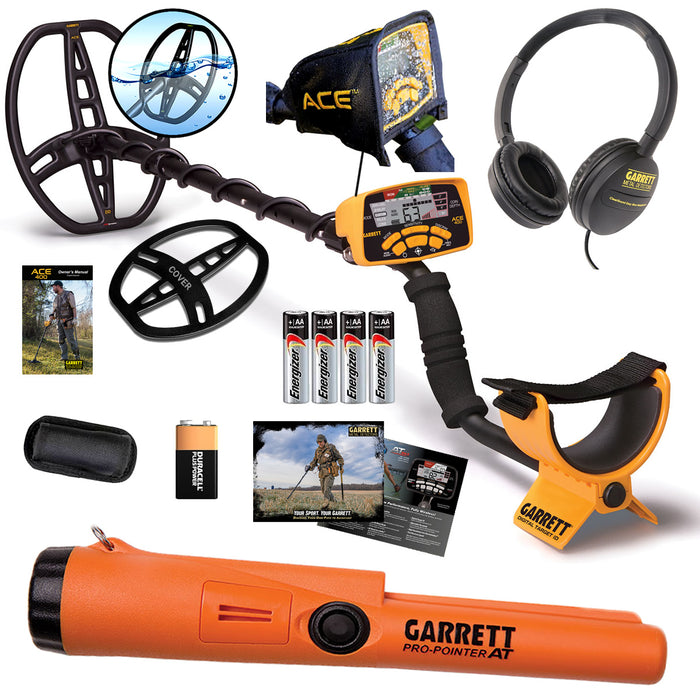
2. Garrett ACE 400 with Pro-Pointer AT Pinpointer Best Budget
Best for: Budget-conscious users who want solid performance for light gold hunting.
- Frequency: 10 kHz (VLF)
- Waterproof coil (8.5 x 11 in)
- Iron Audio and digital target ID
- Adjustable sensitivity
- Headphones included
The Garrett ACE 400 is a smart entry point into gold hunting. Its frequency sits lower than the dedicated machines, but it still reads small flakes and shallow nuggets, and Iron Audio helps you skip the trash. It is light, fast to learn, and right at home in parks, dry creek beds, and old mining ground. For anyone not ready to spend top dollar, it gets real results without the steep price.
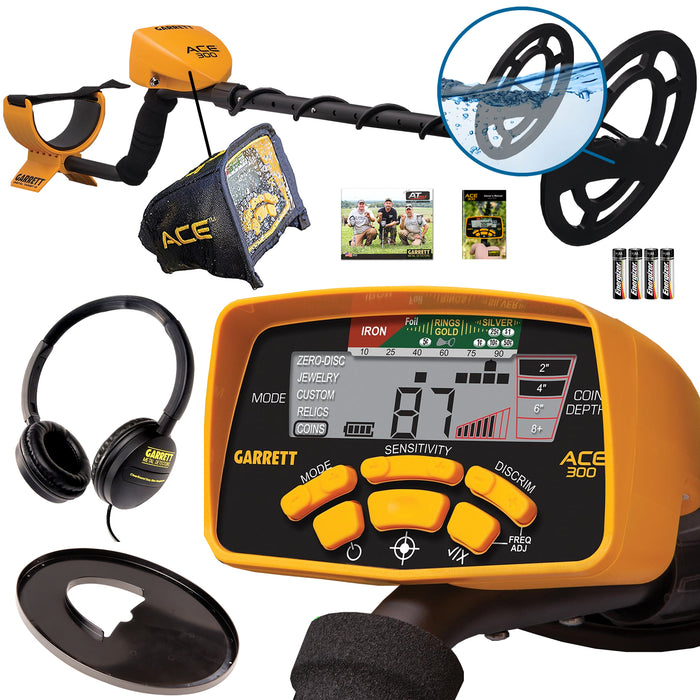
3. Garrett ACE 300 with Headphones Best for Beginners
Best for: Beginners and casual users working dry, shallow terrain.
- Frequency: 8 kHz (VLF)
- Waterproof coil (7 x 10 in)
- Digital target ID
- Electronic pinpointing
- ClearSound headphones included
The ACE 300 keeps things simple, affordable, and accurate. It skips the pro-level controls but still locates surface gold with clear audio feedback and steady sensitivity. Open fields and dry washes are its sweet spot, and it makes a reliable backup unit once you move up to a dedicated gold machine. For a first detector that will not frustrate you, it is hard to beat at the price.
Check Price
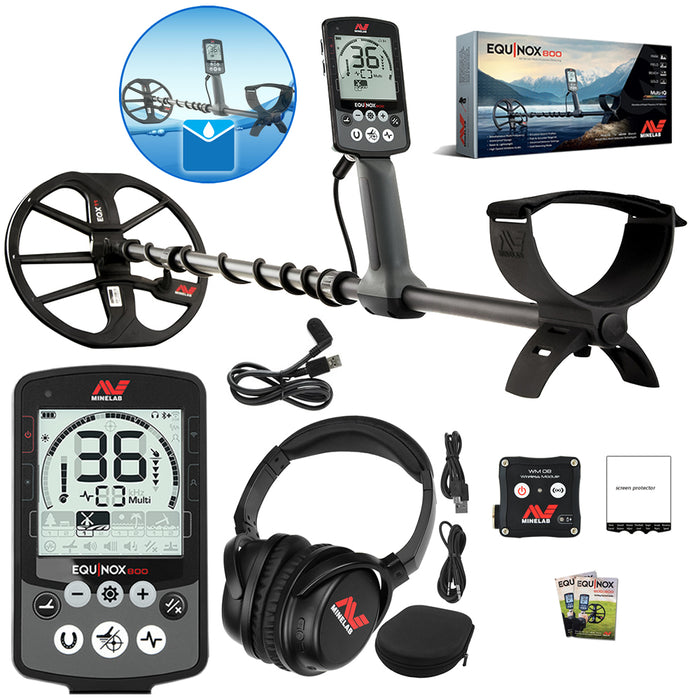
4. Minelab Equinox 800 Multi-Frequency Detector Best for Extreme Ground
Best for: Advanced users chasing gold in tough, mixed conditions.
- Frequencies: Multi plus 20 kHz / 40 kHz (Gold Mode)
- Waterproof to 10 ft
- Bluetooth and WM 08 wireless audio
- Custom search profiles
- Manual ground balance
The Equinox 800 is the multi-frequency workhorse for serious hunters. Its Gold Mode runs high frequencies to expose tiny nuggets in ground that defeats single-frequency machines, and it stays composed in mineralized soil, wet sand, and saltwater fringes. Wireless headphones and deep customization make it the pick for remote, demanding trips. Many professionals rely on it across the rugged goldfields of the American West.
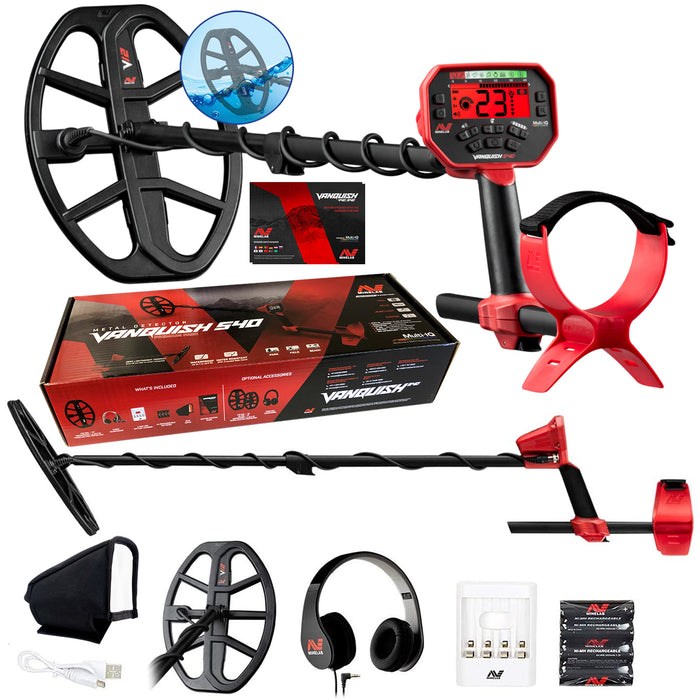
5. Minelab Vanquish 540 with 12 in Coil Best Lightweight
Best for: Lightweight prospecting with modern tech and a quick setup.
- Technology: Multi-IQ
- Waterproof coil (12 in)
- Iron Bias control
- Pinpoint mode
- Red LED backlight
The Vanquish 540 is easy to carry, fast to set up, and surprisingly capable across varied ground. It performs in wet sand, open fields, and mineralized soil, and while it has no dedicated gold mode, Multi-IQ technology helps it catch small targets in most conditions. It suits hunters who want intelligent multi-frequency performance without the weight or the learning curve of a flagship machine.
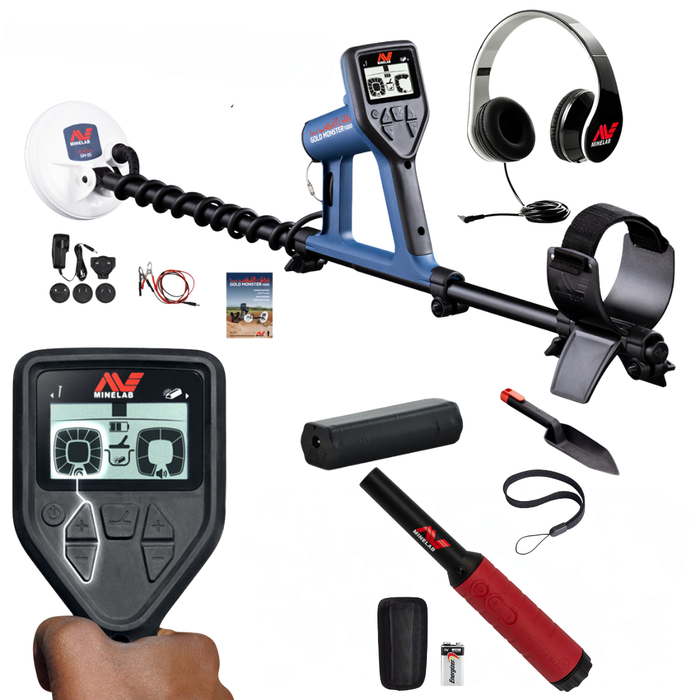
6. Minelab Gold Monster 1000 Prospecting Detector Best for Fine Gold
Best for: Finding small gold nuggets and flakes with high sensitivity and minimal setup.
- Frequency: 45 kHz VLF, tuned for fine gold
- Search modes: Gold (iron reject) and Deep All-Metal
- Ground balance: Fully automatic with built-in noise cancel
- Gold Chance Indicator to flag likely gold targets
- Waterproof search coils with a weather-resistant control box
- Included 5 in DD coil for tight, mineralized spots
The Minelab Gold Monster 1000 remains a top choice for dedicated gold prospectors in 2026. Its 45 kHz frequency is built to expose the fine flakes and sub-gram nuggets that most general detectors miss entirely, and the automatic ground balancing holds steady in challenging, mineral-rich soil without constant manual adjustment. It is the machine to reach for when the gold is small and the ground is hot.
This detector suits both beginners and experienced prospectors who want fast setup, high sensitivity, and reliable results in creeks, dry washes, and hard ground.
VLF vs PI: Which Is Better for Gold?
Most detectors on this list use VLF technology. VLF, or Very Low Frequency, excels at small gold in shallow to medium ground and stays the more affordable choice. A high-frequency VLF such as the AT MAX, the Equinox 800, or the Gold Monster 1000 covers the vast majority of recreational and semi-professional gold hunting.
PI, or Pulse Induction, takes over when the ground turns brutal. PI machines ignore mineralization that cripples VLF and punch far deeper, which is why they dominate the heavily worked, iron-rich goldfields of Australia and the American West. The trade-off is weaker discrimination and a higher price. If you are weighing PI, the names to know are the Minelab GPX 6000, the Minelab SDC 2300, the deep-seeking Minelab GPZ 7000, and the all-terrain Garrett ATX.
For most hunters, a high-frequency VLF is the right call on both performance and budget. Choose PI only when you are committed to extreme, deeply mineralized terrain or chasing deep gold that VLF cannot reach.
Small gold in normal ground, go VLF. Deep gold in hot, iron-loaded ground, go PI. Most weekend prospectors never outgrow a good high-frequency VLF.
Read more: Best Metal Detectors Under $1000
How to Find Gold with a Metal Detector?
Owning the right machine is only half the job. Finding gold also depends on reading the ground and working it correctly. Most detectable gold is placer gold, meaning loose nuggets and flakes that water has eroded out of a lode, the original vein locked in bedrock, and deposited into creeks, gullies, and alluvial gravels. Knowing this tells you exactly where to swing.
- Research the ground. Target known goldfields, historic mining districts, and active creek systems. Confirm public access, BLM land status, and any active mining claims first, since claimed ground is off limits without the holder's permission.
- Read the terrain. Work dry washes, the inside bends of creeks, exposed bedrock cracks, and the base of slopes where heavy gold drops out of moving water.
- Ground balance first. Balance the detector to the local soil so mineralization does not mask faint targets, then push sensitivity as high as the ground noise allows.
- Grid slowly. Keep the coil low and flat, overlap every sweep, and move slowly. Fine gold gives a soft, fleeting signal that a fast sweep skips straight over.
- Recover and verify. Dig the target, then check the dug soil with a gold pan or run it through a classifier, since sub-gram pieces are easy to lose in loose dirt and concentrate.
Gold hunting rewards patience and repetition. The prospectors who fill a pouch are the ones who research hard, swing slow, and dig the faint low tones that beginners walk away from.
Coils and Settings: Dialing In for Gold
Coil choice and settings often separate an empty pouch from a good day. Gold reads as a low-conductive target, sitting close to the signal range of small iron and foil, so the aim is to stay sensitive to weak, low tones without chasing every scrap of ferrous trash.
A DD coil uses two overlapping windings that handle mineralized ground well and give a stable, accurate response. A mono coil punches deeper and is common on pulse induction machines. For fine gold in hot soil, a DD coil is the safer pick.
Coil size matters as much as type. A small 5 to 6 inch coil gives maximum sensitivity to tiny flakes and fits tight, rocky spots, which is why the Gold Monster 1000 ships with a 5 inch coil. A larger coil covers more ground and reaches deeper, but it loses the smallest pieces. Match the coil to the gold you expect.
Four settings decide your success on gold. Run sensitivity as high as the ground stays stable. Keep a faint threshold hum so weak signals can break through instead of vanishing into silence. Choose a faster recovery speed in trashy ground so closely spaced targets separate cleanly. Keep discrimination minimal, or run a true all-metal or gold mode, so the detector never rejects the low tone that gold produces. Because gold often shows a low target ID near iron, trust a repeatable signal over the number on the screen and dig it.
Essential Gold Detecting Accessories
A few tools turn a bare detector into a complete gold-hunting kit and cut down the targets you lose:
- Pinpointer: A handheld probe that locates the exact target once you open a hole, saving real time on small, deep flakes.
- Gold pan and classifier: Pan the dug soil and concentrate to capture the fine gold a coil cannot isolate. A classifier screens out oversized rock before you pan.
- Magnet-tipped pick: Clears ferrous trash fast and breaks up hard-packed ground around a signal.
- Harness or swing arm: Reduces arm fatigue on long hunts so you grid longer with steadier coil control.
- Wireless headphones: Sharpen the faint low tones and keep the threshold audible in windy, open ground.
You can pair any detector above with these tools from our gold prospecting collection to build a kit suited to your terrain.
Gold Detecting Tips from the Field
Gear gets you to the gold, but technique keeps you on it. These notes come straight from prospectors working real ground and from our own customer find data.
- Detectorists in Nevada favor the AT MAX for its accuracy and stability in dry washes.
- Arizona hobbyists report the Equinox 800 Gold Mode performs strongly in red mineral soil.
- For first-time buyers, experienced prospectors consistently recommend a high-frequency unit over a general-purpose machine.
- Slow down your sweep speed over promising ground and keep the coil low and flat to hold depth on small targets.
- Grid your search area in tight, overlapping passes so you do not skip the faint signals that fine gold produces.
As of May 2026, detectors with a 13 kHz or higher frequency posted the highest gold find rates according to Detector Warehouse customer data.
Read more: Highest Rated Metal Detectors
Frequently Asked Questions
What is the best metal detector for finding small gold nuggets?
The Minelab Gold Monster 1000 is the best choice for small gold nuggets and flakes. Its fixed 45 kHz VLF frequency is tuned specifically for fine gold, and the automatic ground balance keeps it stable in mineral-rich soil. The Minelab Equinox 800 is the strong multi-frequency alternative thanks to its 20/40 kHz Gold Mode.
Can VLF detectors find gold?
Yes. VLF detectors such as the Garrett AT MAX and Garrett ACE 400 detect gold well, especially flakes and nuggets near the surface. Look for models running 10 kHz or higher, since higher frequency means better sensitivity to small gold.
What is the difference between VLF and PI for gold detecting?
VLF detectors are better for small gold and general use, and they cost less. PI, or Pulse Induction, detectors go deeper and handle saltwater and heavily mineralized ground better, but they offer weaker discrimination and a higher price.
Are all metal detectors waterproof?
No. Some are fully waterproof, like the Garrett AT MAX and Minelab Equinox 800, while others have only a waterproof coil, like the Garrett ACE 300 and Minelab Vanquish 540. Always confirm the rating before submerging a control box.
How important is ground balance when detecting gold?
Very important. Ground balance reduces false signals in mineralized soil so real targets stand out. Manual or automatic ground balance improves both accuracy and depth when you are prospecting for gold.
Do I need wireless headphones for gold hunting?
They are not essential, but they help. Wireless audio such as Z-Lynk or Bluetooth gives a faster response and more freedom of movement in rough terrain, with no cable to snag.
Is it worth buying a gold detector under $1000?
Yes. Options like the Garrett ACE 400 and Minelab Vanquish 540 are budget-friendly and effective for light to moderate gold prospecting. They are a sensible starting point before investing in a dedicated machine.
Can I use these detectors in rivers or streams?
Yes. Models such as the Garrett AT MAX and Minelab Equinox 800 are fully waterproof to 10 feet, which makes them well suited to shallow water gold hunts in creeks and streams.
Where is gold most often found in the U.S.?
Gold is commonly found in Arizona, Nevada, California, Alaska, and parts of Colorado. Always check local laws and land access rules before you detect.
How deep can gold metal detectors detect?
Depth depends on nugget size and soil conditions. On average these detectors find small gold around 4 to 8 inches deep, while larger nuggets can be detected considerably deeper.
Also check: Top Metal Detector Brands
Ready to Strike Gold?
Each detector above is proven in real gold-hunting ground, from beginner-friendly simplicity to pro-level performance. There is a match here for your terrain and your budget.
Shop Gold Detecting Gear
Leave a comment