


If you have spent real time chasing gold, you already know the hunt does not end when your detector beeps. That is where a pinpointer earns its place in your kit. These small, hand-held detectors work next to your main machine to find the exact location of a target, so you dig less and recover more. For anyone working rough ground, gravel, or water, that precision is what keeps a tiny nugget from disappearing back into the dirt pile.
Gold is small, and it likes to hide. Flakes and sub-gram nuggets settle into cracks, creek beds, and the spaces between rocks where a full-size search coil cannot reach. A pinpointer slips into those tight spots and isolates the signal. It also holds steady in mineral-heavy soil that can throw off a larger detector, which is exactly the kind of ground most gold turns up in.
Browse our full collection of Pinpointers to see the models covered below and a few more.
Gold Pinpointer Comparison Table
| Product | Technology | Waterproof Depth | Sensitivity Levels | Retune | Target ID | Battery | Best Terrain Use |
|---|---|---|---|---|---|---|---|
| Garrett Pro-Pointer AT | VLF (11.5 kHz) | 20 ft (6 m) | 3 | Yes, fast retune | No | 9V | Wet ground, mineralized soil |
| Minelab Pro-Find 35 | VLF (approx. 12 kHz) | 10 ft (3 m) | 5 | No | Ferrous Tone ID | 9V, approx. 30 hrs | Dirt, rocky ground |
| Minelab Pro-Find 40 | VLF | 10 ft (3 m) | 5 | Yes, Rapid Re-Tune | Ferrous Tone ID | 9V | Streams, deeper soil |
| Nokta AccuPoint | VLF | 10 ft (3 m) | Adjustable | Yes | Ferrous / Non-Ferrous | Rechargeable | Creek beds, tech users |
| Fisher F-Pulse | Pulse Induction | 6 ft | 3 | Yes | No | 2 x AA | Saltwater, hot rocks |
Why a Pinpointer Matters for Gold Prospecting
A full-size metal detector gets you close to a target. A pinpointer finishes the job. When you are chasing gold in dry riverbeds, tailings, or under rocks, a wide search coil can only narrow the location so far. Sweep a pinpointer through the hole and the loose dirt and it pulls the exact spot out of the noise, often in seconds.
The ground matters too. Many gold areas carry heavy mineralization that confuses standard detection. A good pinpointer either tunes that interference out or runs on Pulse Induction, which stays calmer in hot soil and wet salt. That stability is the difference between a clean signal and a string of false beeps.
For the machine that gets you to the dig spot in the first place, see our metal detectors for gold prospecting.
Key Features to Look For in a Gold-Specific Pinpointer
1. Sensitivity and Frequency
Gold targets are tiny, so a gold pinpointer needs high sensitivity to respond to small, low-conductive metal. Most pinpointers in this range run a Very Low Frequency (VLF) circuit between roughly 11 and 13 kHz, which gives a sharp response on small finds. Adjustable sensitivity helps here: turn it down in clean soil to cut chatter, then push it up in tough ground when you are hunting flakes and sub-gram pieces.
2. VLF vs Pulse Induction
This is the choice that decides how a pinpointer behaves in your soil. VLF units are sensitive to small gold and offer target tones, but they can get noisy in highly mineralized or salty ground. Pulse Induction (PI) units, like the Fisher F-Pulse, ignore most ground mineralization and salt, so they stay stable on wet beaches and hot rocks, though they trade away some discrimination. If you hunt mild dirt and freshwater, VLF is a strong pick. If you work saltwater or heavily mineralized sites, PI is worth the trade.
Quick rule: mild soil and small gold favor VLF. Saltwater, black sand, and hot rocks favor Pulse Induction.
3. Waterproof Build for Streams and Creeks
Gold loves moving water. Creeks and rivers trap flakes and small nuggets in gravel and bedrock cracks, so a waterproof pinpointer is not optional for stream work. Look for a rating of at least 10 feet (3 meters) if you plan to reach into the water, and 20 feet if you wade deep or snorkel. The Garrett Pro-Pointer AT leads here at 20 feet.
4. Discrimination and Re-Tuning
Target ID, sometimes called Ferrous Tone ID, gives a different tone for iron so you can pass on trash without digging. Re-tuning is just as useful in gold ground: a quick button press clears the unit of surrounding mineralization and shrinks the detection field, which makes it far easier to isolate a single small target inside a busy hole.
5. Battery Life and Alerts
Long hunts need long battery life. Some VLF pinpointers run close to 30 hours on a single 9V, while rechargeable units like the Nokta AccuPoint top up by USB between trips. A lost-pinpointer alarm and auto shut-off are small features that save real money and frustration, since these tools are easy to set down and forget in the field.
Looking at one brand in particular? See the full Garrett Pinpointer collection.
Best Pinpointer Metal Detector for Gold
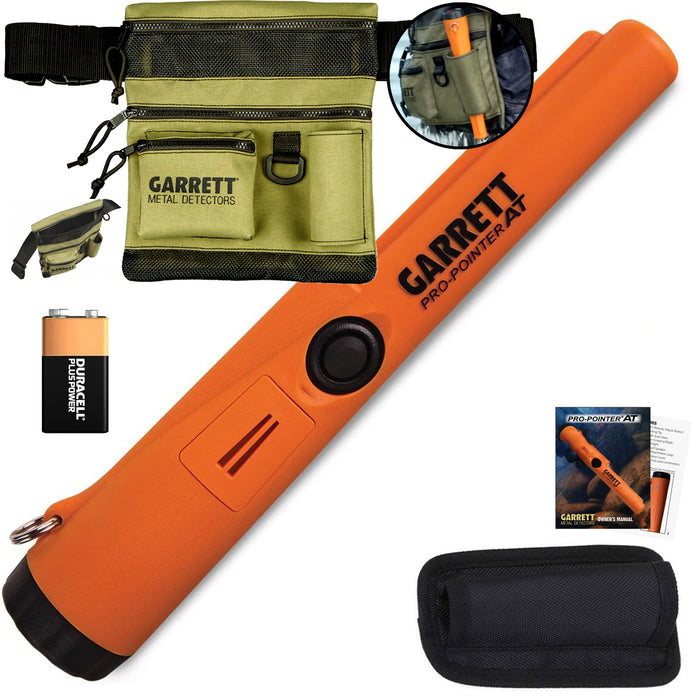
1. Garrett Pro-Pointer AT Pinpointer
Best for: gold hunting in wet and high-mineral groundKey specs:
- VLF, 11.5 kHz operating frequency
- Waterproof to 20 feet (6 meters)
- 3 sensitivity levels
- 360 degree detection
- Fast retune feature
- Lost alarm and auto shut-off
- Patented scraping blade
This one stays a favorite for a reason. The 20-foot depth rating makes it the standout for stream, creek, and shallow-water gold, and the fast retune clears mineralized ground in a single press. The 360 degree detection lets you scan every side of a target, and the proportional vibrate alert reads clearly even when your head is underwater. With roughly twice the battery life of many lighted pinpointers, it holds up through a long day.
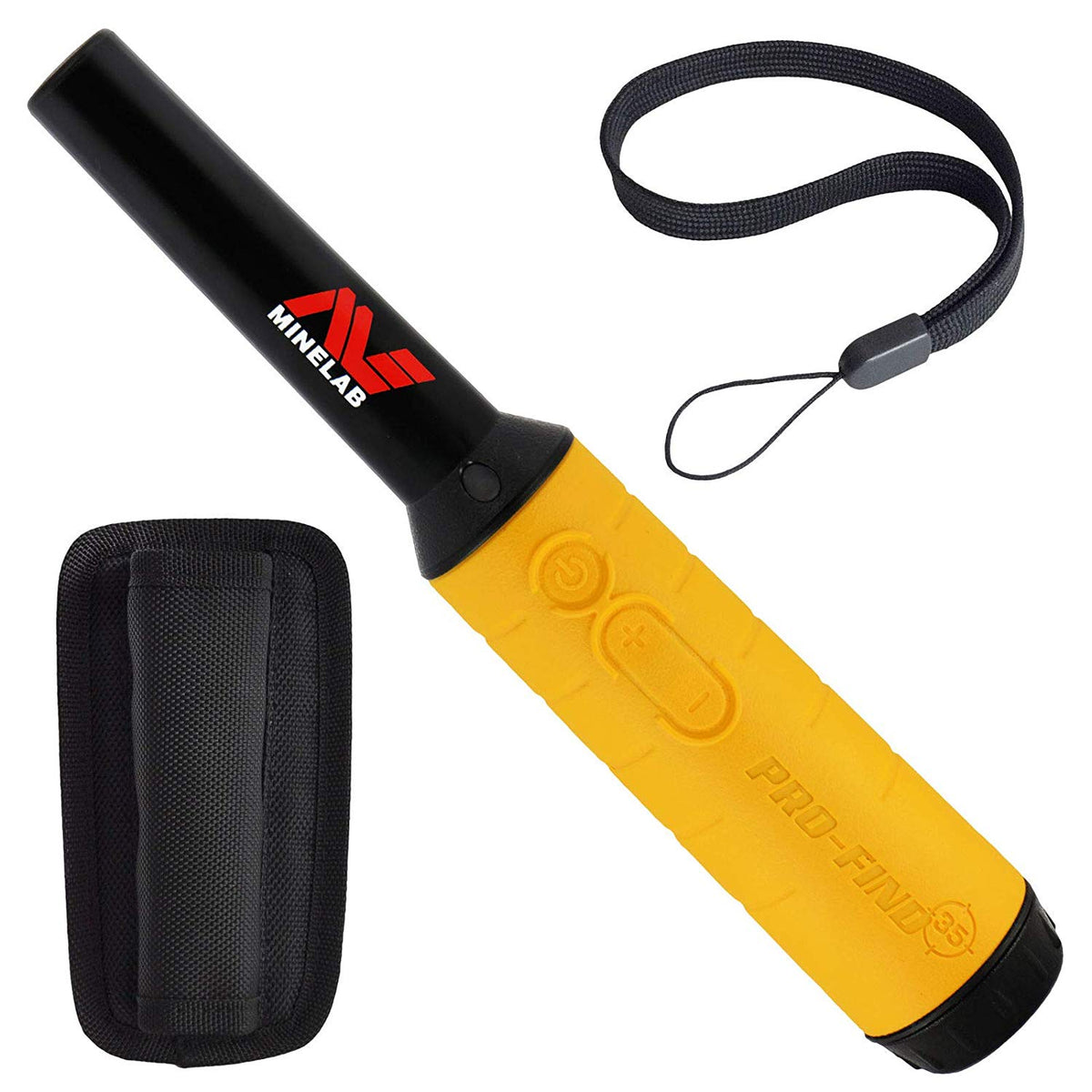
2. Minelab Pro-Find 35 Pinpointer
Best for: dry soil and light water useKey specs:
- VLF, approximately 12 kHz
- Waterproof to 10 feet (3 meters)
- 5 sensitivity levels
- Ferrous Tone ID
- DIF technology to cut detector interference
- LED light and lost alarm
- Up to roughly 30 hours on a 9V
The Pro-Find 35 works well in dirt and rocky gold spots where you want a steady, accurate point. Five sensitivity levels let you match the soil, and the Ferrous Tone ID flags iron so you can skip the junk. It is waterproof to 10 feet and finished in bright yellow, so it is easy to spot if you set it down. A reliable everyday pick for freshwater and land hunting.
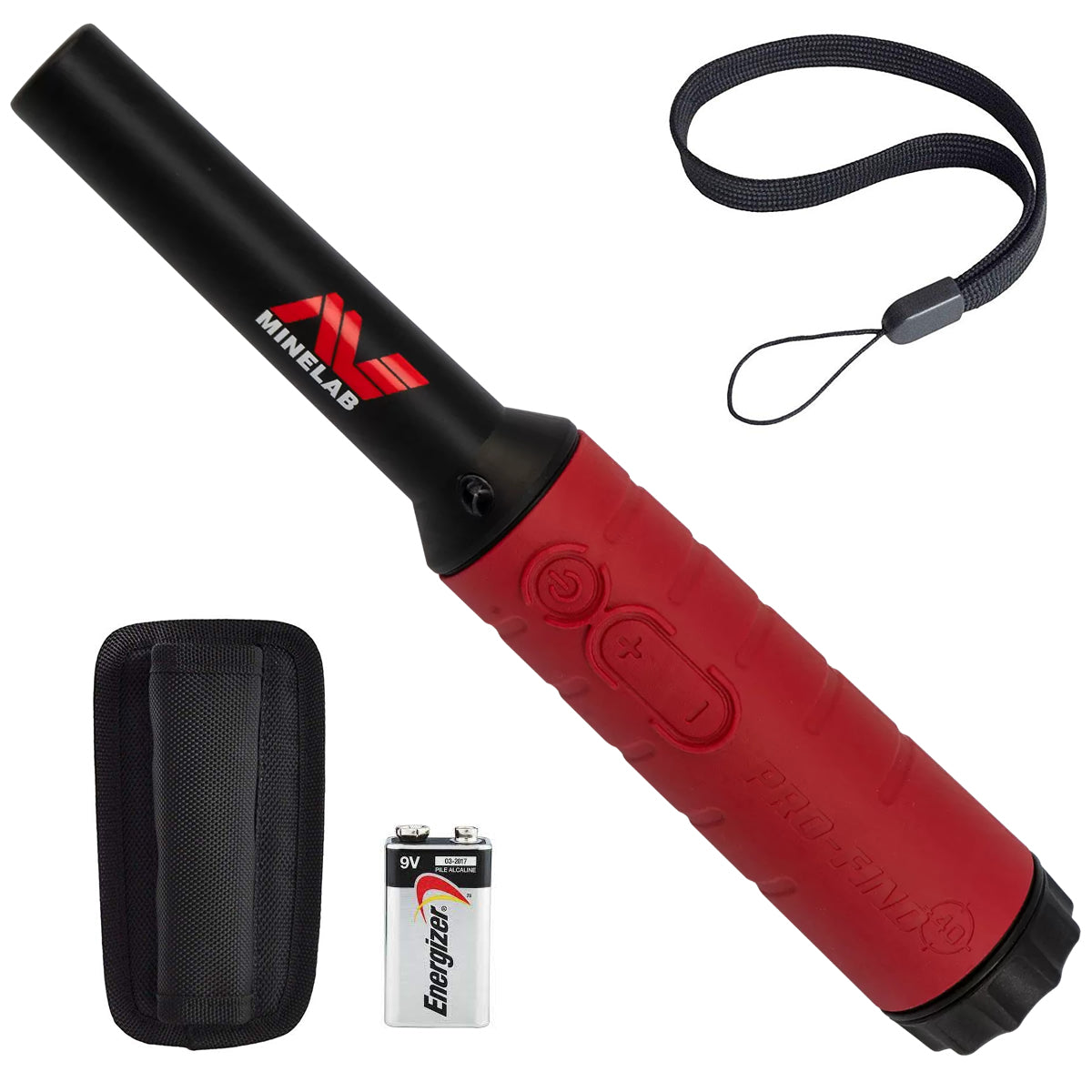
3. Minelab Pro-Find 40 Pinpointer
Best for: deeper gold targets in rivers and streamsKey specs:
- VLF, waterproof to 10 feet (3 meters)
- 5 sensitivity levels
- Rapid Re-Tune
- Ferrous Tone ID
- LED flashlight
- Audio and vibration alerts
The Pro-Find 40 takes the 35 and pushes it about 10 percent deeper, with the added Rapid Re-Tune for fast adjustment in changing ground. That extra reach and quick recovery make it the better choice for tougher, wetter hunts where targets sit a little farther down. The lost alarm and strong LED help in low light and dark holes.
4. Nokta AccuPoint Bluetooth Rechargeable Pinpointer
Best for: tech-focused prospectors and tough terrainKey specs:
- VLF, waterproof to 10 feet (3 meters)
- Bluetooth audio
- Ferrous and non-ferrous tones
- LCD display
- Rechargeable battery with USB charging
- Adjustable backlight
The AccuPoint carries the most features of the group. The LCD screen shows your settings at a glance, and the ferrous and non-ferrous tones tell you what kind of metal you are over before you commit to digging. You can route alerts to Bluetooth headphones, which helps on windy creeks and loud sites. The tip protector and USB charging make it an easy travel companion for long trips.
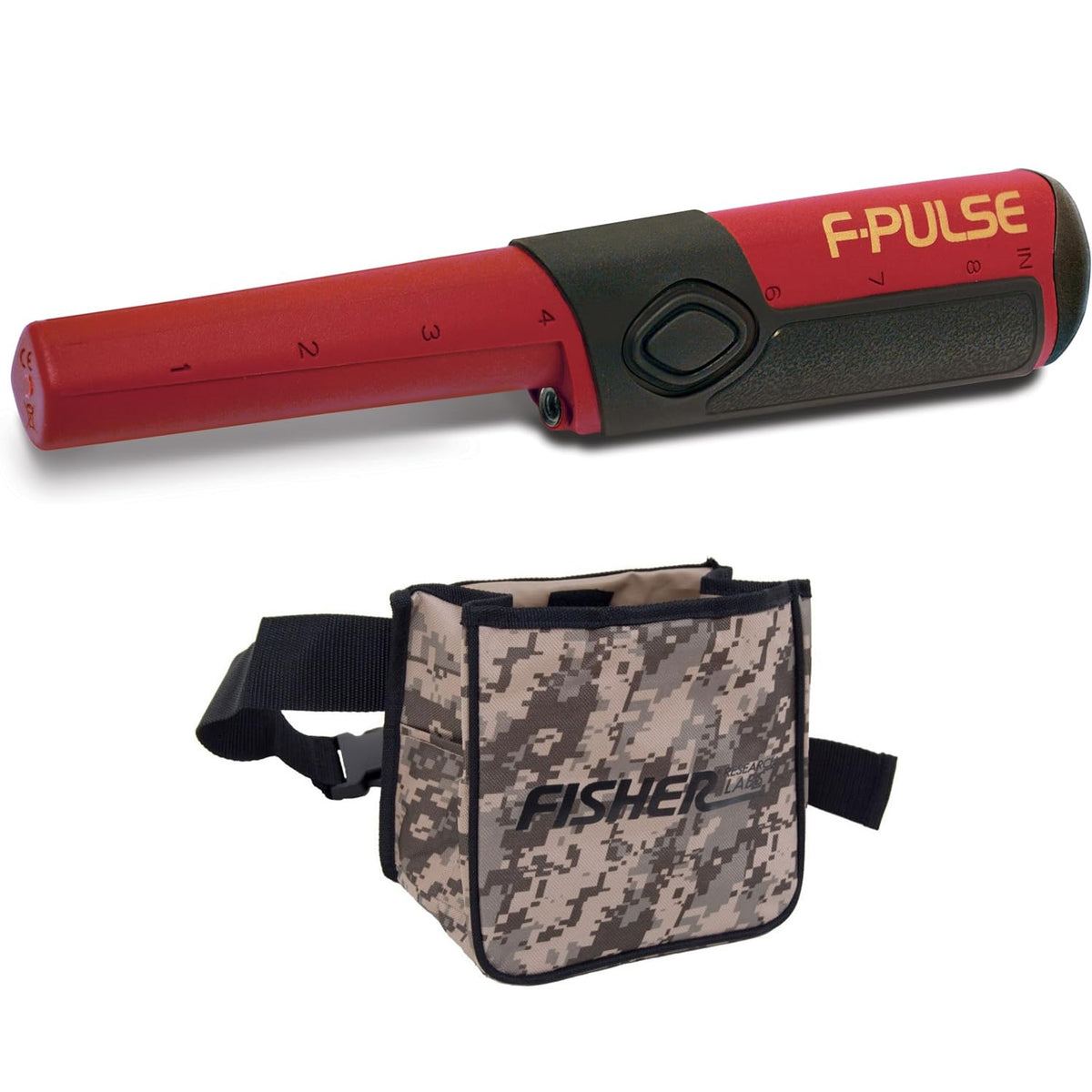
5. Fisher F-Pulse Waterproof Pinpointer
Best for: gold in saltwater or heavily mineralized groundKey specs:
- Pulse Induction technology
- Waterproof to 6 feet
- 3 sensitivity levels
- Adjustable LED
- Retune feature
- Beep and vibration alerts
The F-Pulse is the one to reach for when the ground fights back. Its Pulse Induction circuit ignores salt and mineralization that make VLF units chatter, so it shines on beaches, in black sand, and around hot rocks. The build is rugged, it runs on common AA batteries, and the vibration alert stays clear when you are digging underwater or working a noisy site.
How to Use a Pinpointer for Gold Recovery
- Start with your main metal detector. Once it gives a solid signal, dig a small hole at the target.
- Switch to your pinpointer. Sweep the tip slowly inside the hole and across the dirt pile you pulled out.
- Listen and feel for the response. The unit buzzes or beeps stronger as it nears the gold. Move the dirt in small amounts and keep checking.
- In water, work the tip into gravel and bedrock cracks where flakes settle. Take your time on the seams.
- Re-tune whenever you move to fresh ground or hit mineralization. A quick retune keeps the signal clean and the detection field tight.
Working a tighter budget? See our guide on the Best Metal Detector Pinpointers Under $100.
FAQs About Gold Prospecting with Pinpointers
Can all pinpointers detect gold nuggets?
No. Only sensitive units with proper tuning reliably respond to small, low-conductive gold. Look for a VLF model around 11 to 13 kHz, or a Pulse Induction unit, paired with adjustable sensitivity.
What frequency is best for gold detection?
Higher VLF frequencies, roughly 11 to 13 kHz, give a sharper response on small gold. For salty or heavily mineralized ground, Pulse Induction handles tiny targets without the false signals that high-frequency VLF can produce.
VLF or Pulse Induction for a gold pinpointer?
VLF is the better all-round choice for mild soil and freshwater, since it is sensitive to small gold and offers target tones. Pulse Induction wins in saltwater, black sand, and hot rocks because it stays stable where VLF gets noisy.
Do I need a pinpointer if I already have a gold detector?
Yes. A gold detector finds the general area, but a pinpointer locates the exact spot inside the hole and dirt pile. That means smaller holes, less digging, and faster recovery of small targets.
Which pinpointers work best in mineralized soil?
Units with manual or rapid re-tune, or Pulse Induction models, handle mineralized ground best. The Garrett Pro-Pointer AT, Minelab Pro-Find 40, and Fisher F-Pulse are all strong options for tough soil.
How deep can a pinpointer detect gold?
Pinpointers are short-range tools by design, typically detecting within a couple of inches of the tip. Their job is precise location inside a dig, not depth, which is what your main detector handles.
Are pinpointers waterproof enough for creek and river hunting?
Many are. Aim for at least a 10-foot (3-meter) rating for general stream work. If you wade deep or snorkel, the Garrett Pro-Pointer AT at 20 feet gives you more room.
Final Thoughts
If gold is what you are after, a pinpointer is not a luxury. It is the tool that turns a promising signal into a find in your pouch. Less digging, less guesswork, more recovery, especially on the small flakes and nuggets that are easy to lose in loose dirt.
Match the technology to your ground and you will not look back. Pick VLF for small gold in mild soil and freshwater, choose Pulse Induction for salt and heavy mineralization, and look for a waterproof rating that fits where you hunt. The right pinpointer pays for itself the first time it saves a nugget you would otherwise have walked away from.
See all of our top metal detectors and accessories at Detector Warehouse.
Leave a comment